
Vulnerability Management
Vulnerability Management
Our vulnerability management program goes beyond scanning. We provide risk-based prioritization using threat intelligence context, remediation guidance, and continuous tracking to reduce your exploitable attack surface.
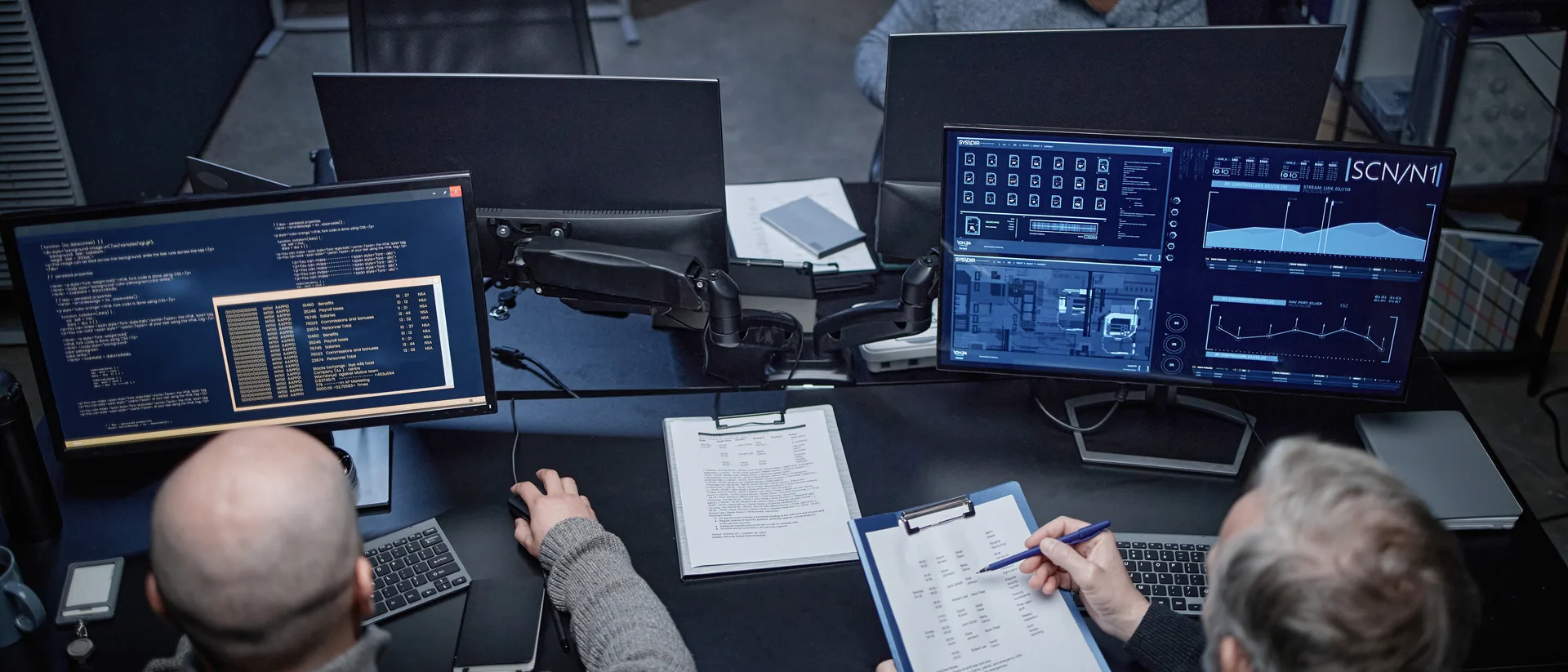
Command view
What this service changes operationally
Glexia vulnerability management focuses remediation on the exposures most likely to create business harm. We combine asset context, exploit intelligence, exposure paths, ownership workflows, and validation so teams stop chasing every CVE and start reducing the risk attackers can actually use.
Known, unknown, internal, external, cloud, remote, and third-party assets are reconciled into one operating view.
Remediation is tracked by accountable owner, business service, severity, exception, and validation status.
Findings are scored using exploitability, asset criticality, exposure path, privilege, and compensating controls.
Delivery path
From kickoff to measurable outcomes
Unify the inventory
Collect scan, asset, cloud, endpoint, and external exposure data, then tag systems by owner and business impact.
Prioritize what matters
Validate findings, correlate exploitability with asset context, and create remediation projects for the top risks.
Run remediation cadence
Route work to owners, track SLA progress, manage exceptions, and confirm fixes through retesting.
Measure exposure reduction
Report trend lines, recurring control failures, residual business risk, and the next-quarter exposure roadmap.
Deliverables
Artifacts your team can operate from
Asset and exposure inventoryRisk prioritization modelRemediation ownership matrixVulnerability SLA frameworkException and risk acceptance workflowExecutive exposure dashboard
Common integrations
TenableRapid7 InsightVMQualys VMDRMicrosoft Defender VMCloud asset inventoriesCMDB and ITSM platformsPatch management toolsExternal attack surface tools
Best fit
- Organizations overwhelmed by vulnerability volume, duplicate findings, or unclear remediation ownership
- Security teams shifting from compliance scanning to exposure management and attack-path reduction
- Executives who need measurable risk reduction instead of raw CVE counts
Service FAQ
Vulnerability Management questions leaders ask
Short answers for scope, operating model, and implementation decisions before a formal engagement begins.
How does Glexia prioritize vulnerabilities?
We prioritize by practical exploitability, known exploitation, public exposure, business criticality, privilege path, compensating controls, and remediation feasibility. This turns large CVE lists into owner-specific work that reduces the exposures attackers are most likely to use.
Do you include external attack surface management?
Yes. We reconcile known assets with internet-facing services, cloud resources, remote access points, domains, certificates, third-party exposure, and unmanaged systems. The result is a cleaner inventory and a clearer view of what attackers can reach from outside.
Can you help with patch ownership and SLA reporting?
Yes. We build the operating cadence around remediation owners, severity-based SLAs, exception handling, retesting, and executive reporting. Teams get a practical workflow for patch accountability rather than another dashboard full of unresolved findings.
Capabilities
Capabilities
Continuous vulnerability scanning and discovery
Risk-based prioritization with threat context
Remediation tracking and SLA management
Attack surface management
Patch management advisory
Vulnerability trend reporting and analytics
Related
Related services
Explore complementary capabilities to strengthen your overall security posture.
SOC Monitoring & Detection
Continuous threat monitoring, detection, and triage from our global 24/7 SOC team with sub-15-minute alert response.
Explore SOC Monitoring & DetectionIncident Response & Recovery
Contain, investigate, and recover with structured, mission-ready response playbooks and sub-2-hour engagement.
Explore Incident Response & RecoveryRed Team & Adversary Simulation
Full-spectrum adversary simulation across internal, external, and human attack surfaces to validate your defenses.
Explore Red Team & Adversary Simulation