
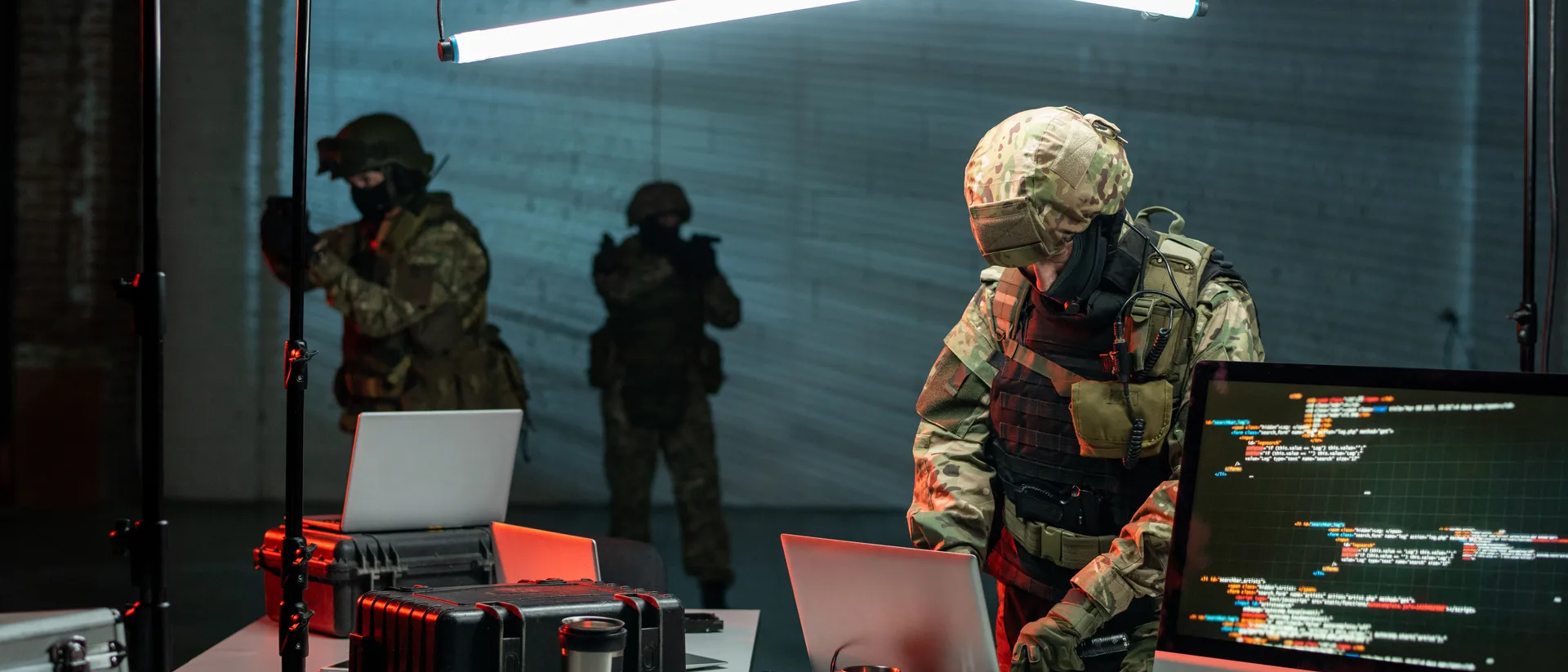
Red Team & Adversary Simulation
Red Team & Adversary Simulation
We run controlled red-team campaigns that emulate real-world adversary behavior across network, application, physical, and social engineering attack vectors. Our operations are mapped to MITRE ATT&CK and deliver actionable findings.
Command view
What this service changes operationally
Glexia red team operations test whether real adversary behaviors can reach your crown jewels, not whether a checklist of vulnerabilities exists. Engagements combine threat intelligence, custom objectives, controlled exploitation, detection validation, and executive reporting that turns offensive findings into defensive improvement.
Campaigns map actions to adversary techniques so findings improve detection, response, and remediation priorities.
Technical, detection, and executive summaries explain what happened, why it matters, and what must change.
Testing uses controlled, non-destructive methods with agreed safety rules and live communication paths.
Delivery path
From kickoff to measurable outcomes
Set objectives and guardrails
Agree campaign goals, safety constraints, communications, target systems, notification rules, and success criteria.
Reconnaissance and access planning
Profile public exposure, identity paths, cloud surfaces, application targets, and likely operator routes.
Execute controlled operations
Run the campaign, document evidence, coordinate safety checks, and assess detection and response in real time.
Replay and improve
Deliver reports, facilitate purple-team replay, tune controls, and define validation steps for remediation owners.
Deliverables
Artifacts your team can operate from
Rules of engagementAttack narrative and evidence packMITRE ATT&CK technique mapDetection gap matrixExecutive risk briefingRemediation validation plan
Common integrations
SIEM and detection dashboardsEDR and identity telemetryCloud control-plane logsEmail security platformsApplication and API targetsTicketing and remediation workflowsCyber range and tabletop exercisesExecutive reporting channels
Best fit
- Security leaders who need proof that controls work against realistic attacker objectives
- Organizations preparing for board scrutiny, major audits, mergers, or regulatory assurance
- SOC teams that want purple-team coaching tied to observed detection and response gaps
Service FAQ
Red Team & Adversary Simulation questions leaders ask
Short answers for scope, operating model, and implementation decisions before a formal engagement begins.
How is a red team engagement different from a penetration test?
A penetration test usually validates vulnerabilities in a defined scope. A red team engagement is objective-led adversary simulation: it tests whether realistic attackers can move from initial access to a business-impact objective while measuring detection, response, and decision-making along the way.
Will red team testing disrupt business operations?
Engagements are designed around safety. We agree rules of engagement, protected systems, escalation contacts, testing windows, stop conditions, and non-destructive methods before activity begins. Operators maintain live communication so high-risk actions can be paused or adjusted quickly.
Do you include purple team workshops after testing?
Yes. Purple team replay is often the most valuable part of the engagement. We walk defenders through key techniques, show what telemetry did and did not capture, tune detections, improve playbooks, and help owners validate that remediation closes the practical attack path.
Capabilities
Capabilities
MITRE ATT&CK-mapped adversary emulation
External and internal penetration testing
Social engineering and phishing campaigns
Physical security testing
Purple team collaboration workshops
Executive debrief with prioritized remediation
Related
Related services
Explore complementary capabilities to strengthen your overall security posture.
SOC Monitoring & Detection
Continuous threat monitoring, detection, and triage from our global 24/7 SOC team with sub-15-minute alert response.
Explore SOC Monitoring & DetectionIncident Response & Recovery
Contain, investigate, and recover with structured, mission-ready response playbooks and sub-2-hour engagement.
Explore Incident Response & RecoveryZero Trust Architecture
Modern identity- and policy-driven security architecture with measurable risk reduction at enterprise scale.
Explore Zero Trust Architecture