
Incident Response & Recovery
Incident Response & Recovery
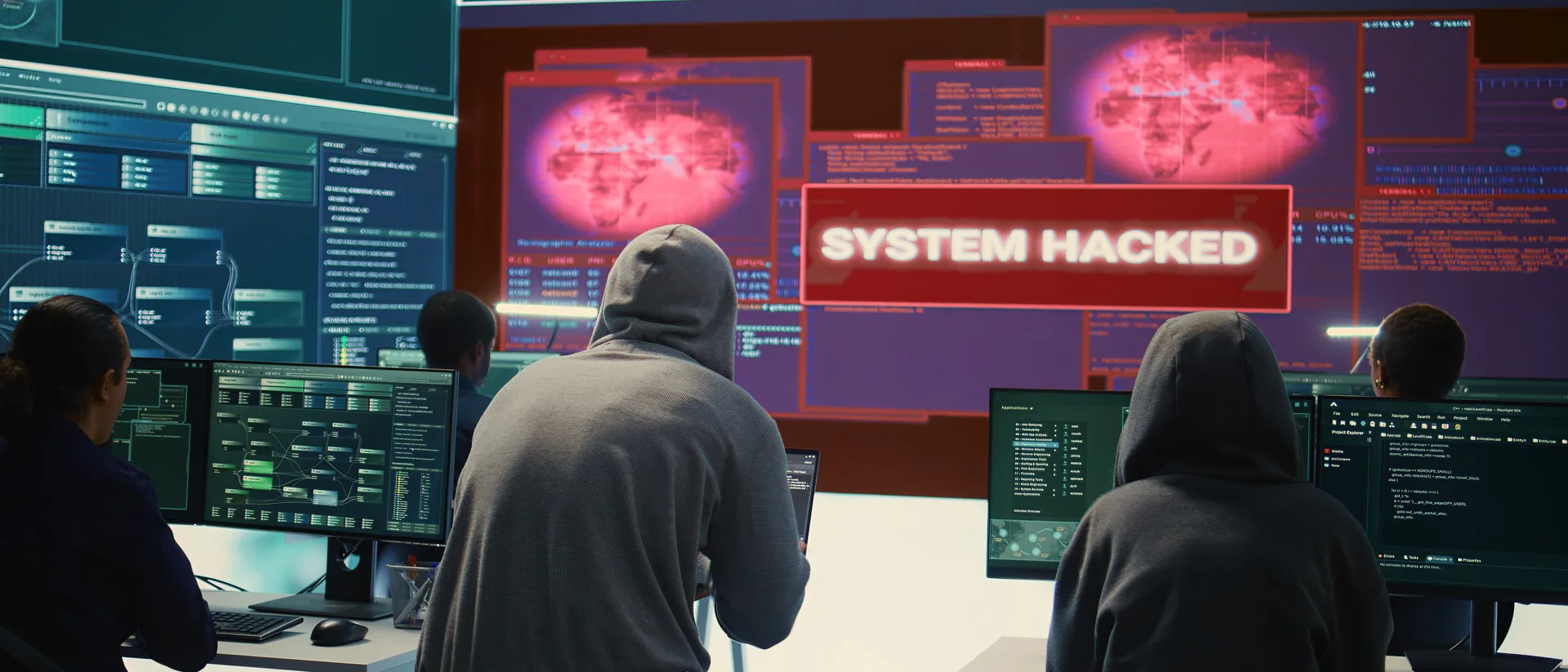
Our incident response team coordinates forensic collection, containment, eradication, recovery, and post-incident hardening. We operate on retainer and on-demand models with guaranteed response times for critical incidents.
Command view
What this service changes operationally
Glexia treats incident response as a business recovery mission, not just forensic analysis. We stabilize the environment, preserve evidence, coordinate legal and executive stakeholders, remove attacker access, and guide restoration so the organization comes back with fewer residual paths for reinfection.
Emergency cases move through a defined intake, severity, and mobilization path with named technical and executive leads.
Forensics, containment, eradication, recovery, and communications are coordinated as one operating cadence.
Post-incident work converts findings into control fixes, evidence packs, and board-ready lessons learned.
Delivery path
From kickoff to measurable outcomes
Mobilize the response cell
Confirm severity, establish the incident bridge, identify business-critical systems, and preserve volatile evidence.
Find the blast radius
Collect endpoint, identity, network, cloud, and SaaS evidence to determine entry path, scope, and active attacker access.
Contain and eradicate
Execute coordinated containment, remove persistence, rotate credentials, validate clean paths, and guide service restoration.
Harden and report
Deliver findings, regulatory and executive artifacts, prioritized remediation, and a retest plan for root-cause fixes.
Deliverables
Artifacts your team can operate from
Incident command planForensic evidence registerAttack timeline and root-cause reportContainment decision logRecovery validation checklistExecutive lessons-learned briefing
Common integrations
EDR and XDR platformsMicrosoft 365 and Google WorkspaceOkta and Entra IDAWS, Azure, and GCP logsFirewall and VPN telemetrySIEM and SOAR workspacesBackup and recovery platformsLegal and insurer workflows
Best fit
- Organizations experiencing ransomware, business email compromise, cloud compromise, or suspected data theft
- Legal, executive, and technical teams that need one coordinated response cadence
- Retainer clients who want emergency response plus proactive readiness and tabletop validation
Service FAQ
Incident Response & Recovery questions leaders ask
Short answers for scope, operating model, and implementation decisions before a formal engagement begins.
When should we call an incident response team?
Call as soon as there is credible evidence of ransomware, business email compromise, suspicious admin activity, data theft, cloud compromise, active malware, or unauthorized access to sensitive systems. Early mobilization preserves evidence and gives leaders better options before containment choices become more disruptive.
Do you support legal, insurer, and regulator workflows?
Yes. We coordinate with counsel, cyber insurers, executives, communications teams, and internal technology owners. The response cadence includes evidence handling, chain-of-custody support, impact summaries, decision logs, and artifacts that can support notification, claim, and post-incident obligations.
What happens after containment is complete?
After containment, we validate eradication, guide restoration, confirm attacker access has been removed, and translate findings into a remediation plan. The closeout includes root cause, impact analysis, recovery validation, control improvements, and a lessons-learned briefing for leadership.
Capabilities
Capabilities
Sub-2-hour response target for critical incidents
Digital forensics and evidence preservation
Breach containment and eradication
Crisis communications support
Post-incident remediation and hardening
Retainer and on-demand engagement models
Related
Related services
Explore complementary capabilities to strengthen your overall security posture.
SOC Monitoring & Detection
Continuous threat monitoring, detection, and triage from our global 24/7 SOC team with sub-15-minute alert response.
Explore SOC Monitoring & DetectionRed Team & Adversary Simulation
Full-spectrum adversary simulation across internal, external, and human attack surfaces to validate your defenses.
Explore Red Team & Adversary SimulationZero Trust Architecture
Modern identity- and policy-driven security architecture with measurable risk reduction at enterprise scale.
Explore Zero Trust Architecture